
Pharmacy sciences: what the section covers
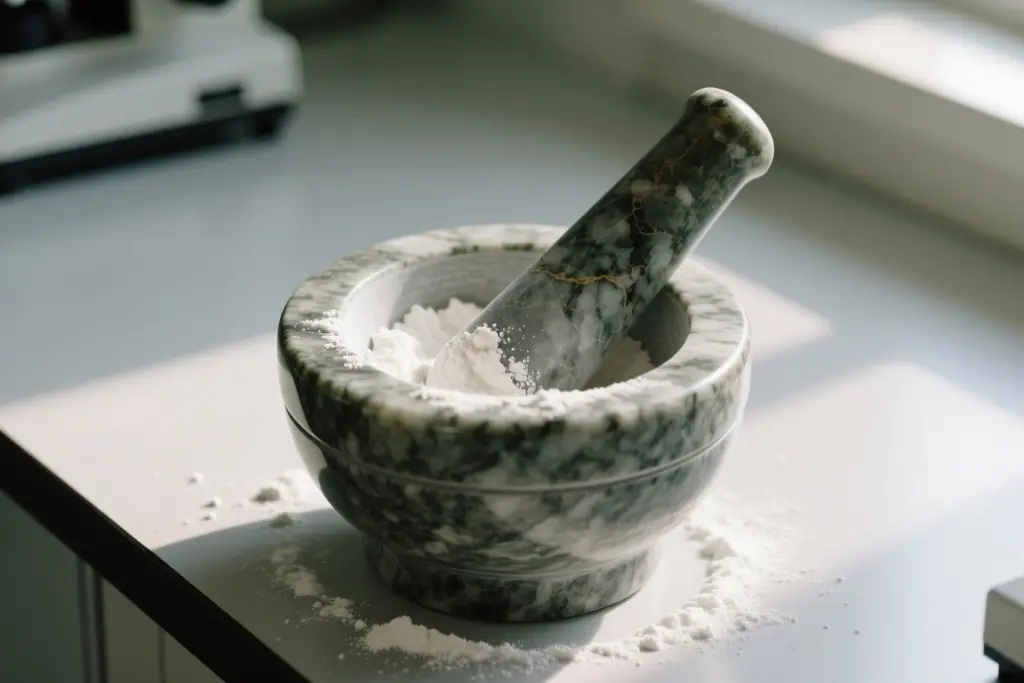
Pharmacy is the science of turning an active substance into a medicine that can be given safely and reliably to patients. It spans the design of dosage forms, the study of how drugs move through the body, the chemistry of drug molecules and the practical realities of pharmacy practice. In an interdisciplinary life-sciences journal, this is usually one of the largest areas of coverage. This page outlines what a pharmacy section typically includes and what you should confirm on the journal's official pages.
Pharmaceutics and formulation
Pharmaceutics deals with the design of the product: how a drug is combined with excipients, shaped into tablets, capsules, creams, suspensions or sterile preparations, and made stable enough to store and use. Formulation work asks how a compound can be delivered in a form that is practical to manufacture and acceptable to the patient.
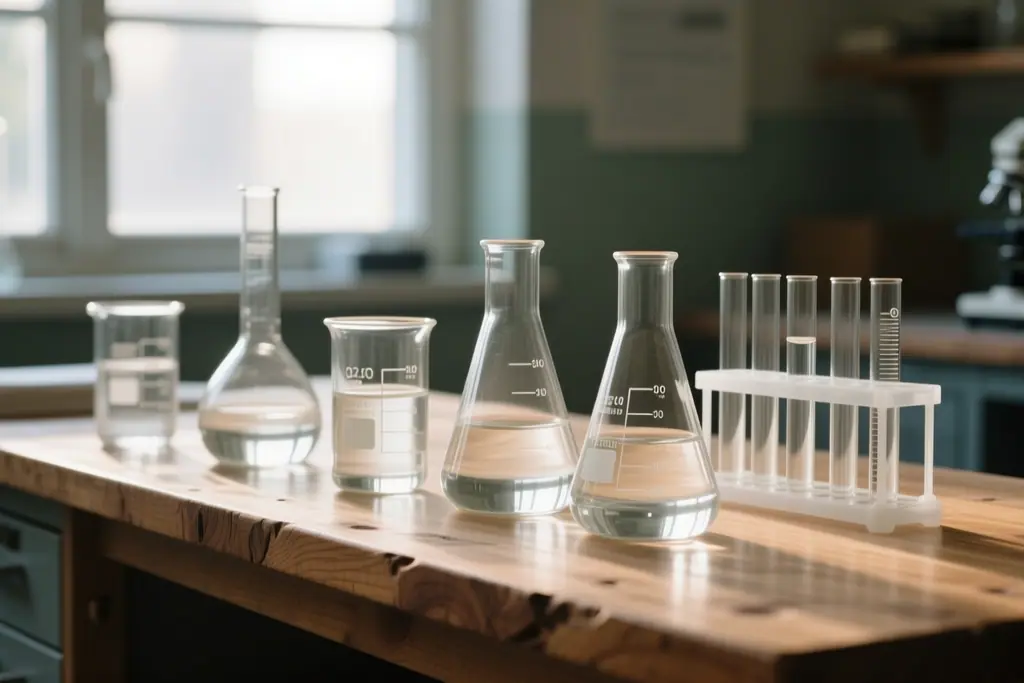
This area also covers quality attributes such as uniformity, dissolution behaviour and shelf life. These properties decide whether a medicine behaves the same way from one batch to the next.
Pharmacokinetics and biopharmaceutics
Pharmacokinetics describes what the body does to a drug: absorption, distribution, metabolism and elimination. Biopharmaceutics connects the physical form of the product to how much of the drug reaches the circulation and how quickly. Together they explain why two products containing the same substance can behave differently.
These fields rely on measurement and modelling, and they sit close to both analytical chemistry and clinical practice. Studies here often ask how dose, formulation or route of administration affects exposure to the drug.
Pharmacology and medicinal chemistry
Pharmacology examines how drugs act on biological systems, including both the intended effect and unwanted effects. Medicinal chemistry works on the molecules themselves, seeking to improve potency, selectivity and safety through structural modification. The two areas inform each other closely.
Research in this space often moves between laboratory chemistry, cell and animal models, and the interpretation of mechanisms. It is a natural meeting point for the pharmacy and biology sections of a journal.
Pharmacognosy and phytochemistry
A substantial tradition of medicine derives from natural sources, and pharmacognosy continues to study plants, microorganisms and other organisms for bioactive compounds. Phytochemistry examines the chemical constituents responsible for observed effects. This work spans extraction, isolation, identification and biological testing.
Studies in this area must be careful about evidence, since traditional use is not the same as demonstrated efficacy. Sound reporting distinguishes what was tested from what is merely claimed.
Pharmacy practice and clinical pharmacy
Beyond the laboratory, pharmacy includes how medicines are used in practice: dispensing, counselling, adherence, medication safety, hospital and clinical pharmacy, and regulatory affairs. Research here may look at patterns of use, the effects of an intervention or the quality of a service.
This area speaks to patients and health systems as much as to scientists, and it often benefits from methods drawn from the health and social sciences.
The coverage at a glance
The table below summarises the main areas within a pharmacy section and the questions each one addresses. The precise scope of a journal's section is set out in its own documentation.
| Area | Main focus | Typical question |
|---|---|---|
| Pharmaceutics | Product design and stability | How is the medicine made and maintained? |
| Pharmacokinetics | Drug movement in the body | How much reaches the target, and when? |
| Pharmacology | Action on biological systems | What does the drug do, and how? |
| Medicinal chemistry | Molecular design | How can the molecule be improved? |
| Pharmacy practice | Use of medicines | How are medicines used safely in practice? |
Where the area overlaps with others
Pharmacy rarely stands alone. Formulation depends on physical and analytical chemistry; pharmacology depends on biology; practice depends on clinical evidence. This overlap is a strength, because many of the most useful advances come from work that spans more than one discipline.
- Analytical chemistry supports the measurement of drug content and purity.
- Biology provides the models used to test effects and safety.
- Organic and physical chemistry underpin design and stability.
- Clinical and social research inform how products are actually used.
- Regulatory science connects all of these to the requirements of approval.
Submitting to a pharmacy section
If your work belongs here, make the pharmaceutical question explicit. A study that reports a chemical result without connecting it to a product, a patient or a biological effect may fit a chemistry journal better. Framing the contribution in terms of pharmacy helps an editor route the manuscript correctly.
Because sections are named and defined differently across journals, and because scope wording can change, confirm the current coverage on the journal's official pages. If the fit is unclear, the editorial office can advise before you submit.
A pharmacy section brings together formulation, pharmacokinetics, pharmacology, medicinal chemistry, natural products and pharmacy practice around a common aim: making medicines that work safely and reliably. Each area touches the others, which is why the discipline sits naturally in an interdisciplinary journal. Section definitions are set by the publisher, so confirm the current coverage on the journal's official pages.
Read next
Biology and life sciences in the journal
Cell biology, microbiology, genetics, biotechnology and related fields.
Chemistry and analytical sciences
Medicinal, organic, analytical and physical chemistry within a life-sciences frame.
Interdisciplinary work across pharmacy, biology and chemistry
Why the boundaries between the three disciplines are often crossed.