
Analytical methods in pharmaceutical analysis

Analytical methods are the tools that tell us what a substance is and how much of it is present. In pharmaceutical and biological research they are indispensable, because every conclusion rests on measurement, and a measurement is only as good as the method behind it. From checking the purity of a raw material to measuring a drug in blood, analysis is present at nearly every stage. This overview describes the general role of analytical methods and what you should confirm on the journal's official pages.
Why analysis underpins everything
A result is only meaningful if the measurement that produced it can be trusted. Analytical chemistry provides the methods that make claims verifiable, from confirming the identity of a compound to quantifying how much is there. Without reliable measurement, other findings cannot be assessed.
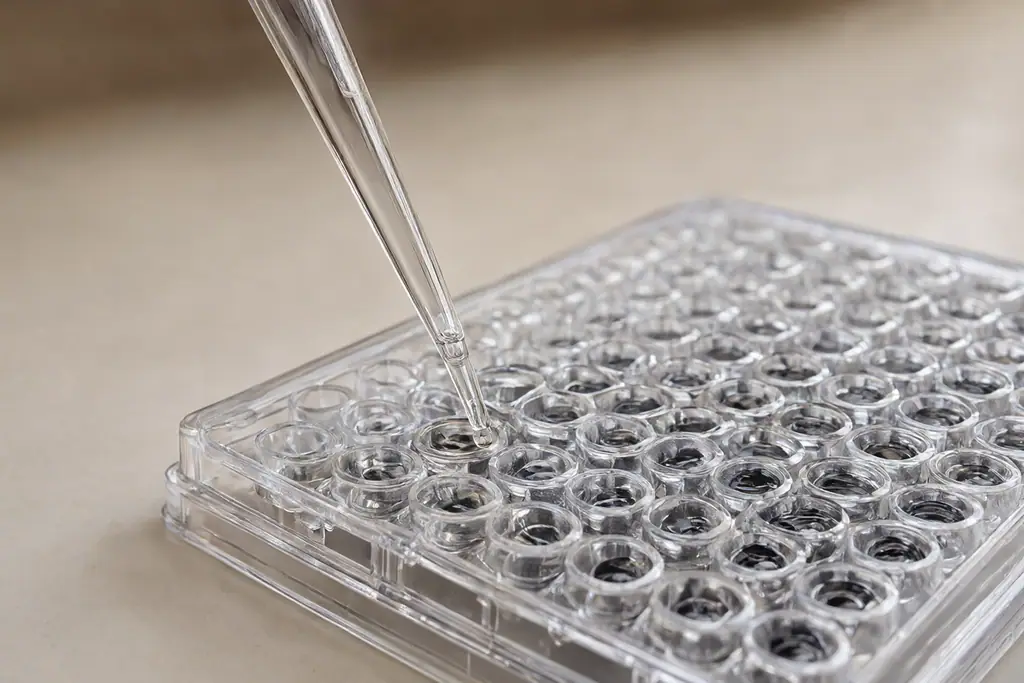
This is why analytical rigour is a shared requirement across the life sciences, even for researchers who would not call themselves analytical chemists.
Separation techniques
Many methods begin by separating the components of a mixture. Chromatographic techniques, in their various forms, move a sample through a system so that different substances travel at different rates and can be detected separately. Separation is often the step that makes identification and quantification possible.
The choice of technique depends on the sample and the question. What matters is that the method is suitable, validated for its purpose and described clearly enough to be repeated.
Spectroscopic methods
Spectroscopy studies how matter interacts with light or other energy, and it can reveal both structure and concentration. Different regions of the spectrum and different techniques answer different questions, from the identity of functional groups to the amount of a substance in solution.
Spectroscopic methods are frequently combined with separation techniques, so that components are first separated and then identified. This combination is one of the workhorses of modern analysis.
Validation and quality control
A method must be shown to be fit for its purpose before its results can be relied on. Validation examines properties such as accuracy, precision, sensitivity and how the method behaves across the expected range. In pharmaceutical work, quality control applies such methods routinely to confirm that a product meets its specification.
Quality control is not a formality. It is the process that ensures every batch of a medicine contains what it should, in the amount it should, without harmful impurities.
Common analytical approaches
The table below summarises broad categories of method and the kind of question each is used to answer. The suitability of any method depends on the sample and the purpose.
| Approach | Used mainly for | What to check |
|---|---|---|
| Separation methods | Dividing a mixture into components | Suitability and resolution |
| Spectroscopic methods | Structure and concentration | Calibration and interference |
| Titrimetric methods | Quantifying a known reaction | End-point determination |
| Electrochemical methods | Certain analytes in solution | Selectivity and stability |
| Combined techniques | Separation with identification | Compatibility of the systems |
Reporting analytical work
Because others must be able to judge and repeat a method, reporting standards are strict. A paper should state the conditions, the equipment or its operating principle, the calibration approach and the limits of the method. Results should be given with the appropriate measure of uncertainty.
Vague reporting is a common weakness. A method described only in outline cannot be assessed, and a reviewer is entitled to ask for the missing detail.
Themes worth following
Analytical science continues to develop, and several themes recur across it. They offer a useful orientation for readers.
- Improving sensitivity so that smaller amounts can be measured.
- Increasing selectivity to distinguish similar substances.
- Making methods faster without losing reliability.
- Validating methods rigorously for their intended use.
- Applying routine quality control to protect patients.
Reading analytical work critically
When reading a paper that rests on measurement, ask which method was used, how it was validated and whether the reported uncertainty supports the conclusion. A precise-looking number can still come from an unsuitable method, and precision is not the same as accuracy.
Because instrument specifications, validation expectations and quality requirements are set by the relevant authorities and change over time, this overview stays general. For anything that affects your own work, confirm the current requirements on the relevant official pages and in the primary literature.
Analytical methods make research verifiable, providing the separation, identification and quantification on which other findings depend. Validation and quality control ensure those measurements can be trusted, and reporting must be detailed enough to repeat. Requirements are set by the relevant authorities, so confirm the current standards on the official pages.
Read next
An overview of drug delivery and formulation approaches
General principles of dosage forms, release control and targeted delivery.
Natural products and phytochemistry: a general overview
How plants and other organisms are studied as sources of bioactive compounds.
Where microbiology and immunology meet pharmaceutical science
Antimicrobials, resistance, vaccines and host defence as research themes.