
Natural products and phytochemistry: a general overview
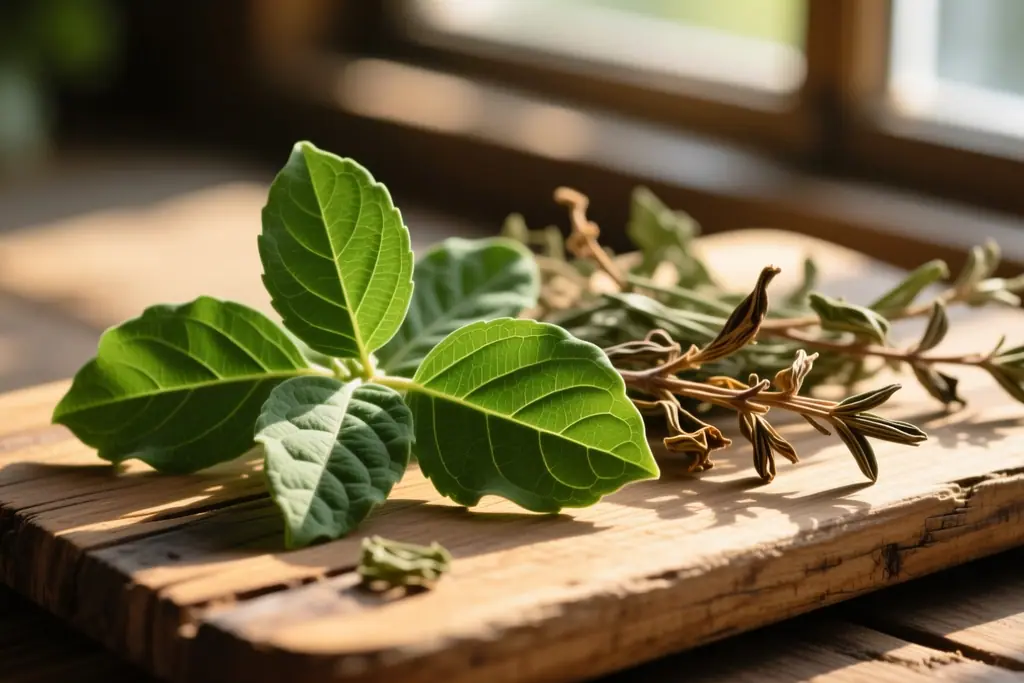
Many medicines have their origins in nature. Plants, fungi, bacteria and marine organisms produce a remarkable range of chemical compounds, and some of these have become the basis of drugs still in use today. Natural product research studies these compounds, asking what they are, how they act and whether they can be developed further. This overview describes the general principles of the field and what you should confirm on the journal's official pages.
What natural products are
Natural products are chemical compounds produced by living organisms. Their diversity is enormous, because organisms have evolved them for their own purposes, such as defence or communication. That evolutionary history means many of these compounds interact with biological systems in specific ways, which is why they are of interest to medicine.
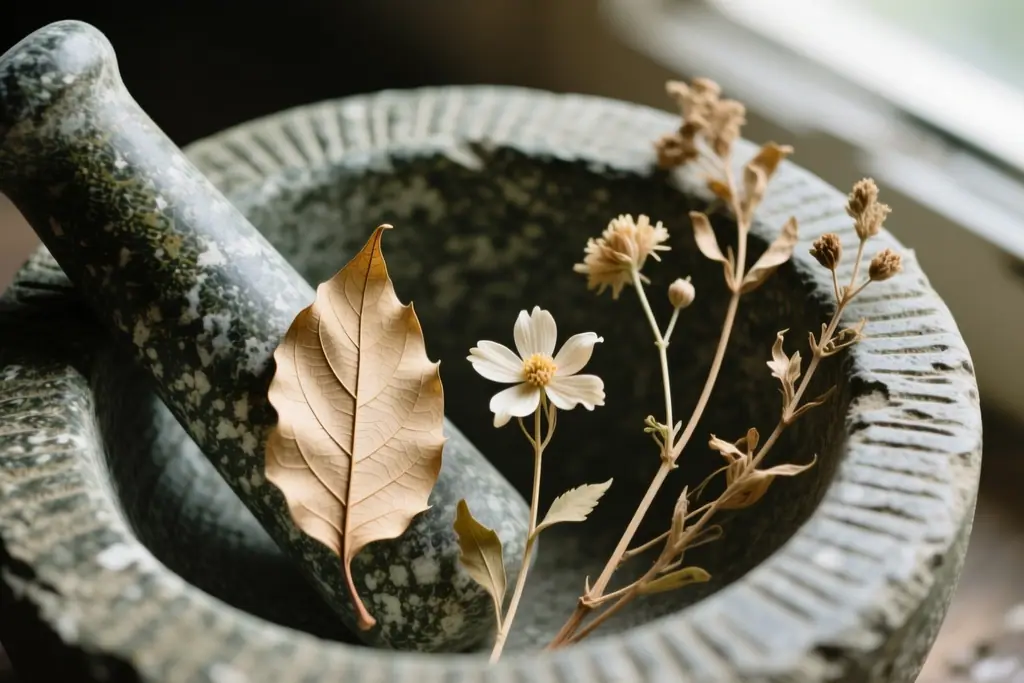
Studying them requires skills from both chemistry and biology, from extracting and purifying a substance to testing what it does. This is one reason the field sits naturally in an interdisciplinary journal.
Finding and identifying compounds
The work usually begins with a source, often a plant used in traditional practice or an organism that produces an interesting effect. Samples are extracted and separated into their components, and the structures of the promising ones are determined using analytical methods. Only then can their biological activity be examined systematically.
This process is slow and often yields compounds that turn out not to be useful. That is a normal part of the work, not a failure, and sound reporting reflects it honestly.
Phytochemistry and pharmacognosy
Phytochemistry focuses on the chemical constituents of plants, while pharmacognosy studies natural sources of medicinal substances more broadly. Both are traditional disciplines that have been renewed by modern analytical and molecular tools. They connect the study of biodiversity with the search for useful compounds.
Work in this area must be careful about evidence. The fact that a plant has been used for a purpose does not by itself demonstrate that it works, and neither does a laboratory result in a simplified system.
From compound to candidate
Finding an active compound is only the start. It must be characterised, tested for safety, and assessed for whether it can be produced or administered in practice. Many promising substances never become medicines, for reasons that have nothing to do with their activity.
Subsequent work often modifies the original molecule to improve its properties, blending natural product chemistry with synthetic and medicinal chemistry. The boundary between the natural and the designed is often blurred in practice.
The field at a glance
The table below summarises the main stages of natural product research and what each one involves. The specifics depend on the source and the question being studied.
| Stage | What it involves | Why it matters |
|---|---|---|
| Collection | Obtaining source material | Basis for later study |
| Extraction | Separating compounds from material | Isolates the substances of interest |
| Identification | Determining structures | Allows results to be understood |
| Biological testing | Examining activity | Tests whether there is an effect |
| Development | Improving and assessing candidates | Turns compounds into usable medicines |
Ethical and legal considerations
Natural product research raises questions that go beyond chemistry. Access to biological material is governed by national and international rules, and the rights of the communities who hold traditional knowledge must be respected. Documentation of the source and the relevant permissions is part of responsible practice.
Sustainability matters too. A compound that depends on over-harvesting a rare species is not a practical medicine, and researchers increasingly consider whether a substance can be obtained without harming the source.
Themes worth following
The field continues to evolve, and several broad themes recur. They are useful for readers who want an orientation without relying on any particular claim.
- Exploring under-studied organisms for new compounds.
- Using analytical techniques to identify substances quickly.
- Connecting traditional knowledge with systematic testing.
- Respecting access rules and the rights of source communities.
- Considering sustainability alongside scientific promise.
Reading natural product research critically
A reader should ask what was actually tested and in what system, and whether the conclusion matches the evidence. Claims about therapeutic potential must be distinguished from demonstrations of activity in the laboratory. A promising result is a reason for further study, not a promise of a medicine.
Because the rules on access, testing and development are set by the relevant authorities and can change, this overview is deliberately general. For details that affect your own work, confirm the current position on the relevant official pages and in the primary literature.
Natural products are compounds made by living organisms, and some have become important medicines. Studying them combines chemistry and biology, from extraction and identification to biological testing and development. Ethical access and sustainability matter throughout. Rules and requirements are set by the relevant authorities, so confirm the current details on the official pages.
Read next
An overview of drug delivery and formulation approaches
General principles of dosage forms, release control and targeted delivery.
Analytical methods in pharmaceutical analysis
The role of separation, spectroscopy and quality control in testing medicines.
Where microbiology and immunology meet pharmaceutical science
Antimicrobials, resistance, vaccines and host defence as research themes.