
An overview of drug delivery and formulation approaches
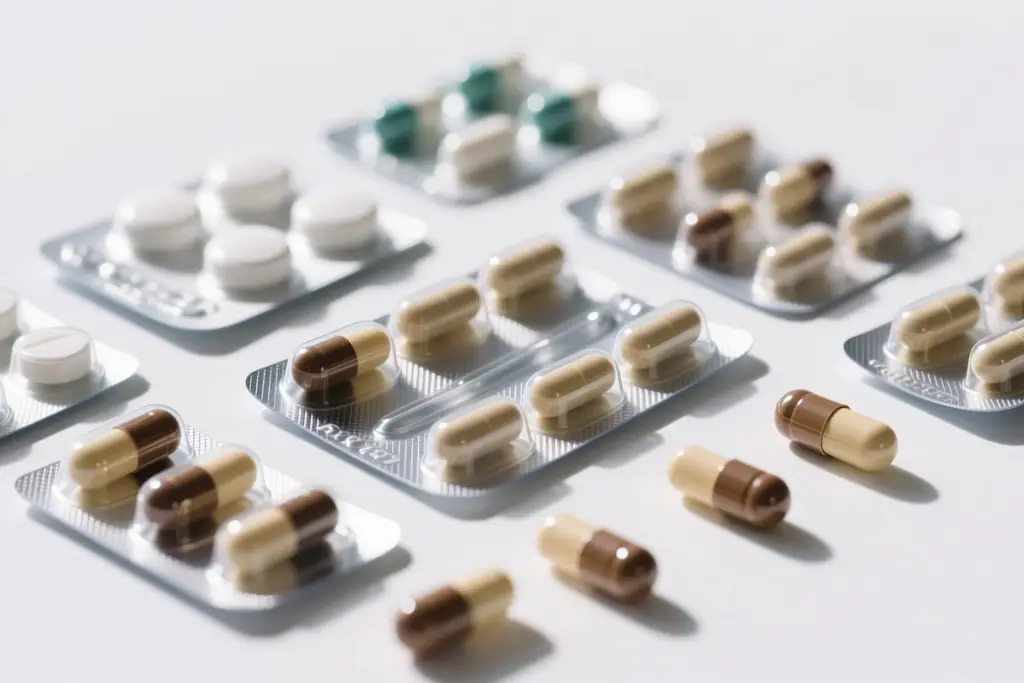
Drug delivery is the field concerned with getting an active substance to the right place, at the right time, in the right amount. A compound that works in a test tube may fail in a patient if it is poorly absorbed, broken down too quickly or unable to reach its target. Formulation and delivery research addresses these problems. This overview describes the general principles involved and what you should confirm on the journal's official pages.
Why delivery matters
The effectiveness of a medicine depends on more than the potency of its active ingredient. It depends on how much of the substance reaches the site where it is needed and how long it stays there. Delivery research tries to control that journey, improving both the intended effect and the margin of safety.

For patients, better delivery can mean fewer doses, less discomfort and more reliable outcomes. For developers, it can rescue compounds that would otherwise be impractical.
Routes of administration
Different routes suit different purposes. Oral delivery is convenient and familiar but must survive the digestive system. Injections deliver directly into the circulation and act quickly, at the cost of requiring a healthcare setting or a device. Topical, inhaled, transdermal and other routes each have their own advantages and limits.
The choice of route shapes everything else in the formulation, from the excipients used to the way the product is tested. It is one of the first decisions in product design.
Controlled and modified release
Rather than releasing a drug all at once, a formulation can be designed to release it gradually or at a particular point in the body. This can keep the concentration within a useful range for longer, reduce the frequency of dosing and sometimes reduce side effects linked to peaks in concentration.
Achieving this reliably is difficult, because release behaviour must be predictable from batch to batch and stable over time. Quality control is therefore central to the field, not an afterthought.
Targeting and carriers
Targeted delivery aims to concentrate a drug at a chosen site and spare healthy tissue. Researchers explore carriers such as particles, vesicles and molecular assemblies that can hold a drug and release it under specific conditions. The idea is attractive, but the path from a laboratory demonstration to a reliable product is long.
Sound reporting in this area is careful to distinguish what has been shown in a model system from what has been demonstrated in living organisms or in patients. Promising results in one setting do not automatically transfer to another.
General principles at a glance
The table below summarises common delivery considerations and what each one involves. The specifics of any product are governed by its own development and regulatory requirements.
| Consideration | What it involves | Why it matters |
|---|---|---|
| Route of administration | How the drug enters the body | Affects convenience and speed of action |
| Release profile | How quickly the drug is freed | Controls concentration over time |
| Carrier design | Material that holds the drug | Can improve targeting and stability |
| Stability | Behaviour during storage | Ensures the product remains effective |
| Manufacture | Producing consistent batches | Reliability for every patient |
Testing and evidence
Delivery research moves through stages, from laboratory characterisation to cell models, then to animal studies and eventually to human trials. Each stage answers a different question, and a result at one stage does not guarantee the next. Careful studies state clearly which stage their evidence comes from.
Reporting must also be honest about limitations. A formulation that performs well in a simplified laboratory test may behave differently in a complex biological environment, and reviewers expect that caveat to be acknowledged.
Themes worth following
Delivery is a broad field, and several themes recur across it. They are useful for readers trying to understand where the work is heading without relying on any single claim.
- Improving how much of a drug reaches its target.
- Reducing the number and burden of doses.
- Making products stable and reproducible to manufacture.
- Designing systems that respond to conditions in the body.
- Demonstrating benefit with evidence that fits the stage of research.
Reading delivery research critically
Delivery papers can be exciting and easy to over-interpret. A reader should ask which system the work used, how the result was measured, and whether the study supports the claim being made. Enthusiasm in a discussion section should not be mistaken for proof.
Because specific products, methods and regulatory requirements are set by their own frameworks and change over time, this overview is deliberately general. For anything that matters to your work or your health, confirm the current details on the relevant official pages and in the primary literature.
Drug delivery research aims to place an active substance where it is needed, when it is needed, and in a form that can be made reliably. Routes, release profiles and carriers are the main levers, and evidence should always be read in the context of the stage at which it was obtained. Specific requirements are set by the relevant authorities, so confirm the current details on the official pages.
Read next
Natural products and phytochemistry: a general overview
How plants and other organisms are studied as sources of bioactive compounds.
Analytical methods in pharmaceutical analysis
The role of separation, spectroscopy and quality control in testing medicines.
Where microbiology and immunology meet pharmaceutical science
Antimicrobials, resistance, vaccines and host defence as research themes.